Skip to content
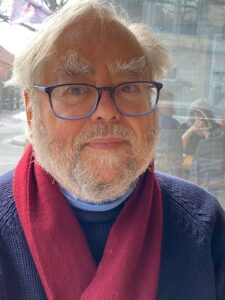
I can say with a story what I can’t say any other way. Spirits speak to the souls of my characters in secret. It’s a sweet language that I discover each time I write. I am driven by an inner force that has been as undeniable and unstoppable as it has been inexplicable.
As James Lee Burke, a mystery writer, wrote in a wonderful article in The New York Times about what it means to be a creative person, which I found inspiring: “. . . whatever degree of creative talent I possess was not earned but was given to me by a power outside myself, for a specific purpose, one that has little to do with my own life.”
All I know is I no longer strain to hear the voices of the past—voices that hitherto stood in my way are now voices that offer me a hand. I have discovered what the great bard said so elegantly so long ago: “I know it,/ But ‘tis so lately altered that the old name/ Is fresh.” If only more people could understand the impermanence of power, any power, but especially the power of trauma. I want people to know that when we assert our dominance and control, we can rewrite our historical narrative—that is how we become ruler of our empire.
 Long before I understood anything, I’d read Montaigne, and when he said a good life is lived, I lit up! But I didn’t know why. I soon forgot about Montaigne. But I tried to live life as if I liked it because I wanted to be good. But for me, to get to an understanding, I had to die a few times. Those deaths taught me about resilience and faith.
Death, the irrevocable separation from the past, is a fortifying pain, if you survive. I did, and all the insights into trauma followed. After death, we reinvent ourselves. My new life has no uncertainty or lack of conviction. Society, personalities, and problems have taken on a new dimension with my new perspective. My new understanding of my inner, spiritual self has made the outer world more beautiful, which came as a total surprise. A new peace pervades my whole body; I feel badly about nothing. Regrets exist in the past. They do not disturb me. I want nothing and can do anything. It’s a freedom that doesn’t frighten me. I only want to share what was given to me.
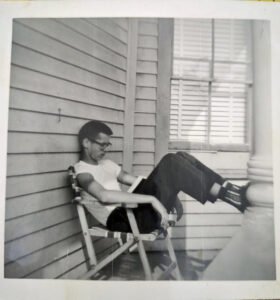
Photo – Ron reading Crime and Punishment Age 14
Ron has a degree in French literature and a Master’s in school psychology from UMass/Boston. He studied for a year at the Sorbonne in Paris. He has taught French and worked with special needs students.
In 1978, while living in Boston he received a commendation from the Humane Society of the Commonwealth of Massachusetts, for “bravery in saving a life,” when he rescued a woman from a burning building.
In his professional career Ron was:
Executive director of Nuva, a Gloucester social service agency, which, under his direction, grew from $150K to $4M in those twelve years by designing and implementing creative programs to address addiction, mental health, and homelessness.
“Each one of the Enduring Heroes are remarkable people, but Ron is memorable to me because he said that anyone who beat a heroin addiction is a bigger hero than he will ever be.” Barry O’Brien – filmmaker of a short film about Ron and Nuva and the Enduring Hero award
Assistant Director of Community Program Innovations
Interim Executive Director at the Friends of the Middlesex Fells in Melrose, MA
Ron was the first guest on the Off Deadline podcast discussing his work as the interim executive director of the Friends of the Middlesex Fells.
Ron is fully retired and spends his time writing, cooking, and enjoying life with his wife, Lisa.