Skip to content
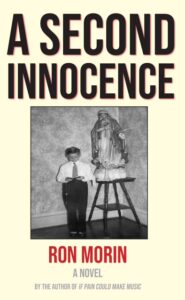
A Second Innocence follows four lives—Raphael, Daphne, Jordi, and Angela—each imprisoned in their own solitude, yet each finding the courage to embrace who they truly are.
A priest, a convicted murderer, a middling artist, and a woman bound by epilepsy—their paths could not seem more different. Yet through shared suffering, they forge bonds that transcend their isolation. In one another, they find acceptance, and in love, they discover something radical: the reflection of their own selves, fully seen.
Their journey is unsentimental (The path to heaven starts in hell), but it leads them to a “second innocence”—not naivety, but a hard-won clarity that acknowledges life’s ugliness while embracing human imperfection. Beyond the brokenness, they glimpse a deeper mystery: the beauty that emerges when one fully absorbs reality’s complexity.
I wrote “Book II” first because Daphne, its protagonist, was—in my mind—the spiritual heir to Beatrice, Lemeilleur’s ghost of a daughter in If Pain Could Make Music. Beatrice was never fully realized, yet her presence haunted the narrative. I couldn’t let her go. She returned as Daphne.
We live in an era where self-hatred gnaws at the soul of this nation. Daphne, who has every reason to despise herself, refuses to surrender. Instead, she claims her right to grow, to change—to live. Her transformation is a revolt against despair, a testament to resilience.
Popular culture churns out trauma-twisted villains, but rarely do we witness the inverse: a shattered person remaking themselves into something whole. I named her Daphne for its echoes of victory—like the mythic nymph who escapes Apollo’s grasp, my Daphne refuses to be defined by her pain.
She sees the world as Keats’ “vale of Soul-making,” where suffering forges one’s identity. How often did I imagine her in her cell, whispering “Ode to a Nightingale”—
The weariness, the fever, and the fret…—wondering where her strength would come from.
Where does faith begin when all seems lost?
Kierkegaard’s shadow looms over this book. Will Daphne become a knight of infinite resignation, surrendering what she loves most? Or will she find a fiercer grace?
Every part of her story is about love—not Nabokov’s King, Queen, Knave cynicism, but its spiritual antithesis.
Finishing “Book II” was an exorcism. Parts of me died in the writing. Wordsworth was right: to write is to reveal oneself to oneself. For months, I drowned in Daphne’s despair, choking on the nihilism of our age.
Then, during a ping-pong game with devout friends—people whose faith shields them from lies—the spell broke. Watching them, I wondered: What if they had adopted a child?
And just like that, Raphael was born.